


Client Alerts  - Energy and Renewables December 12, 2025

New York State Grid Operator’s 10-Year Planning Report Identifies Narrowing Reliability Margins

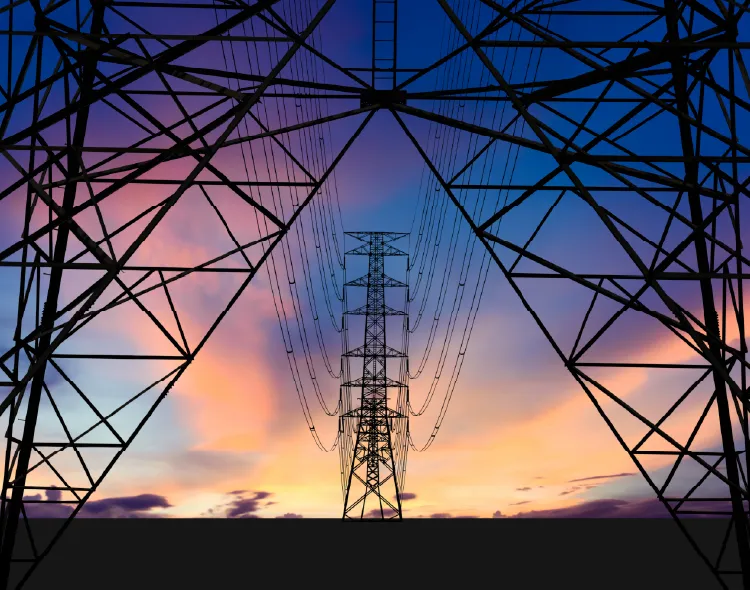
Electricity workers and pylon silhouette

More Plausible Supply and Demand Scenarios To Be Required In Future Planning

On November 21, 2025, the New York Independent System Operator (NYISO)—the organization that operates New York State’s electric grid—published its latest Comprehensive Reliability Plan (CRP), a planning report that helps address gaps identified by the NYISO’s Reliability Needs Assessment (RNA). These complementary reports, published in two-year cycles, forecast the reliability of New York’s electric grid over the next 10 years to determine where electric demand might outpace electric supply, thereby increasing the risk of outages. The CRP recommends actions to address any identified gaps and other related planning challenges. The CRP and RNA are critical planning tools that complement other NYISO planning reports, such as the quarterly Short-Term Assessment of Reliability (STAR) and the System & Resource Outlook which forecast the next five and 20 years, respectively

Key Takeaways from the 2025-2034 Comprehensive Reliability Plan

  1. Using the baseline forecast, there is no actionable reliability need over the next 10 years. The CRP noted that one reliability need identified in the 2024 RNA was resolved due to a reduction in projected downstate electrification.
  2. However, New York’s grid over the next 10 years has an extremely narrow margin for error to maintain reliability. Three compounding structural trends increase the variability in the risk that the grid’s demand will outpace supply over the next 10 years:
    • The aging of existing generation units.
    • The rapid influx in large load interconnection requests.
    • Delays in development of new dispatchable generation and transmission infrastructure.

    These trends combine with other system conditions, such as peak load, weather variability and unexpected outages to threaten grid reliability.

  3. To account for these risk-increasing trends, the CRP urged that reliability planning must include a variety of plausible supply and demand scenarios to more accurately evaluate reliability needs and proactively address them. NYISO plans to start including these scenarios in its forthcoming 2026 RNA.
  4. As reliability margins decrease over time, the risk of violating grid reliability standards increases. The CRP identified the need in 2034 for additional “perfect capacity” in the range of 400 MW in a baseline demand scenario and 4,800 MW in a higher demand scenario for the grid to maintain compliance with reliability standards. These scenarios assumed all generation in the interconnection queue is constructed on time by 2034 and NYPA’s small gas plants remain in-service or are functionally replaced by 2034. The CRP did not offer any locational requirements for such perfect capacity.
  5. Summer heatwaves continue to challenge operating conditions in the near term and must inform future planning. The CRP noted a “key observation” that, during the three-day June 2025 heat wave, intermittent generation (solar and wind) performed better during the peak hour than anticipated in planning assumptions. Conversely, synchronous generation (thermal and hydro) performed worse than anticipated. In addition, behind-the-meter solar and demand response helped delay peak load by two hours during the heatwave. Nonetheless, grid operators had to leverage extraordinary emergency measures to ensure system reliability. The CRP recommends updating criteria for reliability planning so that such emergency measures are not assumed as part of routine grid operation practice, especially as peak load shifts in time and magnitude.

Next Steps

The NYISO will begin integrating the CRP findings and recommendations into the 2026 RNA in spring of 2026. The NYISO’s next System & Resource Outlook is expected to be released in summer of 2026. NYISO reports will continue to be an influential, objective source of information on the current and future health of New York’s electric grid. However, as the CRP noted, to solve for issues identified in such reports, “many barriers lie outside NYISO’s control, including permitting timelines, siting restrictions, supply chain constraints, and financing hurdles that slow resource development.” Regulatory advancements such as the implementation of the RAPID Act might help.

Overall, New York needs to scale its generation and transmission infrastructure to meet increasing energy demands. Coordination between policymakers, market participants and government agencies will be crucial.

Additional Information

For more information, please contact a member of our Energy and Renewables Industry TeamEnvironmental Law Practice Team, or the Phillips Lytle attorney with whom you have a relationship.
Related Insights

View All