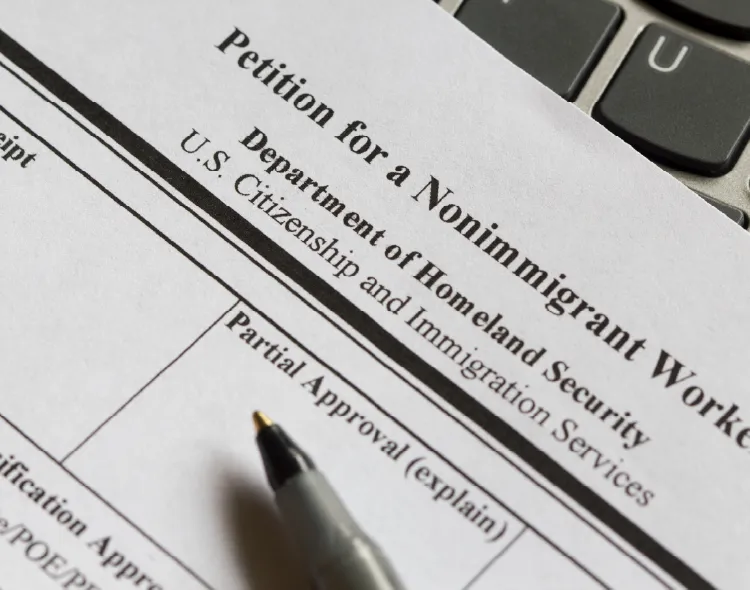




On August 5, 2026, U.S. Citizenship and Immigration Services (USCIS) updated its Policy Manual to address how officers should handle benefit requests that lack sufficient evidence or documentation. Specifically, the updated policy grants USCIS officers full discretion to deny incomplete applications without first issuing a Request for Evidence (RFE) or Notice of Intent to Deny (NOID). This means that if an application is submitted without all required initial evidence, or if the evidence demonstrates that there is no legal basis for approval, an officer may now move directly to a denial.
Under previous policies, USCIS officers were generally instructed to issue an RFE or a NOID if an application was missing any evidence or failed to establish eligibility. This provided applicants with a second chance to remedy any perceived deficiencies. The updated policy aims to discourage what USCIS deems frivolous and placeholder filings and, therefore, represents a shift toward more restrictive adjudication practices. It is also worth noting that the updated policy indicates that if USCIS issues an RFE or a NOID and receives any evidence in response, even if that evidence only partially responds to the RFE or NOID, USCIS may proceed to make a final decision and effectively treat the partial response as a request for a decision.
The updated policy has also realigned USCIS’s RFE and NOID response time frames with federal regulations. According to the policy, while the maximum response period for an RFE remains 12 weeks, officers may issue an RFE with a shorter response period. The maximum response period for a NOID remains at 30 days. The agency has also eliminated the extra 14-day grace period previously granted for international mail, as the regulations only permit an additional three days to respond to notices served by mail.
This policy change makes the filing of immigration applications and petitions significantly less forgiving of administrative oversights and evidentiary gaps and underscores the critical importance of submitting complete and accurate petitions and applications. Because USCIS officers now possess the discretion to issue immediate denials without prior warning or an opportunity to supplement the record, individuals must diligently ensure the completeness and accuracy of all USCIS filings, including RFE and NOID responses, well in advance of the filing date. Failure to include all required evidence and establish eligibility for the benefit sought may result in serious consequences for petitioners and beneficiaries alike, including potential inadmissibility.
Additional Assistance
For more information, please contact a member of our Immigration Practice Team or the Phillips Lytle attorney with whom you have a relationship.
Significant research and editorial assistance provided by Emily R. Sweeney, Legal Clerk.
Receive firm communications, legal news and industry alerts delivered to your inbox.
Subscribe Now