


On July 17, 2026, the Department of Homeland Security (DHS) issued a final rule amending its regulations to change the period of admission for F, J and I nonimmigrants from duration of status (D/S) to a fixed admission period. DHS has indicated that it is implementing this rule to provide a better mechanism for evaluating whether these classes of nonimmigrants are maintaining their status and engaging only in authorized activities while in the United States. Specifically, DHS described duration of status as undermining the agency’s ability to enforce compliance with statutory grounds of inadmissibility related to unlawful presence and creating incentives for fraud and abuse.
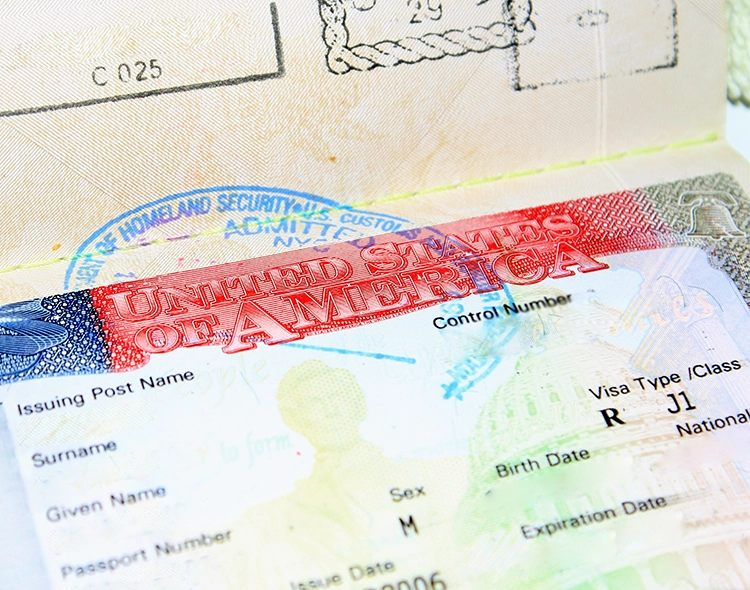
Currently, “duration of status” means that F-1 students, J-1 exchange visitors, and members of the foreign press holding I visas are admitted for the time it takes to complete a full course of study or engage in optional practical training (OPT), an authorized exchange or graduate training program, or foreign media-related employment duties. Dependents of F-1, J-1 and I visa nonimmigrants are also admitted for duration of status to correspond to the principal nonimmigrant’s period of admission. The DHS final rule radically alters this long-standing policy by enforcing a fixed period of admission, which will require individuals admitted in these nonimmigrant categories to routinely file Form I-539, Application to Extend/Change Nonimmigrant Status with U.S. Citizenship and Immigration Services (USCIS) should they need to remain in the U.S. for a period longer than that authorized on their SEVIS Forms I-20, DS-2019s and I-94 documents.
The rule specifies that the fixed term of admission for F-1 and J-1 nonimmigrants will be set up to the length of the educational or exchange program listed on either a student’s SEVIS Form I-20 or a J-1 exchange visitor’s DS-2019, not to exceed four years. For F-1 students, the maximum four-year period of admission includes an additional 30 days to arrive in the U.S. and 30 days to depart or seek to obtain lawful status to remain in the U.S. following program completion, as opposed to the current policy allowing for a 60-day grace period following program completion. The rule, as well as a fact sheet and FAQ published by DHS, also specifies the following policy changes:
A key issue created by this final rule is that DHS now has a clear mechanism for making determinations as to whether F-1, J-1 and I visa nonimmigrants have violated their status.
According to INA § 212(a)(9)(B)(ii), a foreign national is deemed to be unlawfully present in the United States if he or she is present in the U.S. “after the expiration of the period of stay authorized by the Attorney General or is present in the United States without being admitted or paroled.” A USCIS Policy Memo published in 2009 clarified that unlawful presence begins to accrue:
Because those admitted for duration of status do not have an I-94 expiration date, they historically have only accrued unlawful presence upon a finding by USCIS or an immigration judge that they are out of status.
Imposing a fixed term of admission will subject these categories of nonimmigrants to an accrual of unlawful presence if they remain in the U.S. after their I-94s expire. Moreover, the new requirement to file extensions of stay with USCIS in order to continue to maintain these statuses provides new opportunities for USCIS to make findings that individuals have violated their status. If such a finding is made, unlawful presence will begin to accrue as of the date of denial. F, J and I nonimmigrants will thus be subject to a three-year bar from re-entry to the U.S. if they are unlawfully present for a period of more than 180 days but less than one year1, or a 10-year bar if they have been unlawfully present for one year or more.2
The final rule will take effect on September 15, 2026. However, DHS will impose a short-term reprieve from the requirement to file an extension of status application during the first six months after the rule takes effect, provided that the affected nonimmigrant applies for employment authorization or OPT in a timely manner. Additionally, the above-mentioned DHS fact sheet provides the following information for F-1 students during the transition from duration of status to a fixed period of admission:
Once this rule takes effect, all individuals currently in the U.S. in F, J or I status must carefully monitor their I-94 records to ensure that they do not accrue unlawful presence upon the completion of their authorized study, exchange or employment programs. It will also be increasingly important for F-1 students to carefully coordinate with their Designated School Official (DSO) to assess all program end dates and determine whether an extension of stay application is required. Individuals in F, J or I status who fail to timely file an extension of stay application prior to the conclusion of their authorized study, exchange or work programs must promptly depart the U.S. upon their I-94 expiration date to avoid the imposition of a bar to future re-entry.
Additional Assistance
For more information, please contact a member of our Immigration Practice Team or the Phillips Lytle attorney with whom you have a relationship.
Receive firm communications, legal news and industry alerts delivered to your inbox.
Subscribe Now