
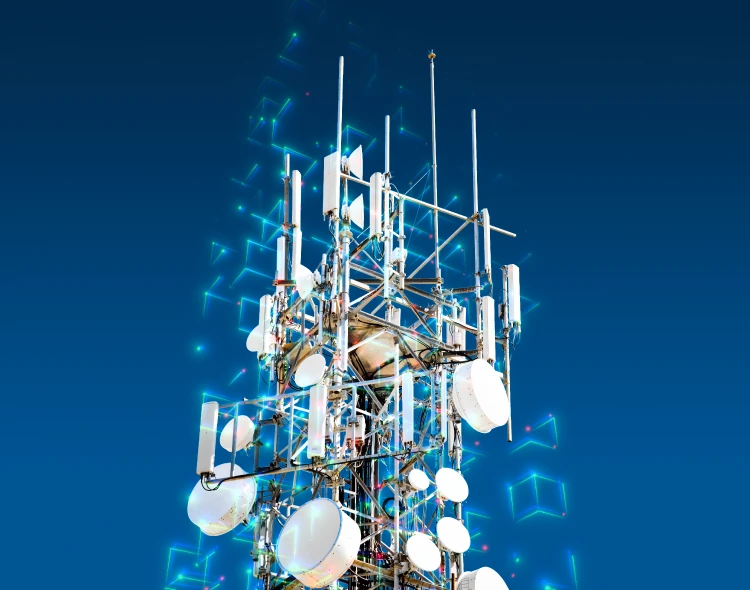


The Federal Communications Commission (FCC) initiated the current Upper C‑band proceeding in February 2025 with the release of a Notice of Inquiry examining whether and how to repurpose the 3.98-4.2 GHz band, known as the Upper C-band, for more efficient use.1 The FCC advanced this effort on November 20, 2025, when it adopted a Notice of Proposed Rulemaking (the Upper C Band NPRM) to propose rules to enable a future auction of the Upper C-band.2
At the same time, the FCC’s initiative reflects ongoing tension between the wireless industry and the aviation sector regarding the use of adjacent mid‑band spectrum. In its comments to the Upper C Band NPRM, the airline industry,3 supported by the Federal Aviation Administration (FAA) Notice of Proposed Rulemaking regarding requirements for interference‑tolerant radio altimeter systems,4 raised concerns that expanded terrestrial wireless operations in the Upper C‑band could interfere with radio altimeters operating in the adjacent 4.2-4.4 GHz band. The altimeters provide altitude data for aircraft. By contrast, mobile network operators and industry associations such as CTIA encouraged the FCC to move quickly, emphasizing the importance of additional mid‑band capacity needed for 5G deployment and network performance. The 2025 Notice of Proposed Rulemaking reflects these competing positions and expressly seeks comment on technical and operational safeguards to support coexistence between wireless and aviation operations.5
The first Lower C‑band FCC Auction 107, conducted in 2021, resulted in the largest spectrum auction in history, generating approximately $94 billion in total proceeds. Of that amount, approximately $81.2 billion was directed to the U.S. Treasury, while roughly $14 billion funded payments to incumbent satellite providers and earth station operators to support the transition of the incumbent satellite operations out of the band.
To provide context for the size of the first C-Band auction, and potentially the scale of a future auction, the BEAD program has allocated $42.2 billion for nationwide broadband deployment, approximately half the amount generated by the auction. Spectrum values are typically measured in dollars per megahertz‑pop ($/MHz‑pop), reflecting the price per unit of spectrum normalized by population. In the 2021 C‑Band auction, the average price for the 280 megahertz of licenses was approximately $0.94/MHz‑pop. By comparison, the 3.45-3.55 GHz auction (FCC Auction 110) conducted in 2022 generated approximately $22.5 billion, with an average price of $0.74/MHz‑pop, making it the third-largest spectrum auction in U.S. history.
The FCC proposes to make available between 100 MHz and up to 180 MHz of Upper C-band spectrum (3.98-4.2 GHz) for flexible use. Under the proposal, the lower amount of spectrum to be auctioned reflects the statutory minimum of 100 MHz (3.98-4.16 GHz), while the upper amount would extend to as much as 180 MHz (3.98-4.16 GHz). The One Big Beautiful Bill Act (OBBBA) requires the FCC to complete an auction of not less than 100 MHz by July 4, 2027. The proposed Upper C-band spectrum is adjacent to and contiguous with the Lower C-band (3.7-3.98 GHz) that was auctioned in 2020-2021. As in the prior auction, the FCC proposes to license the spectrum using Partial Economic Area (PEA) geographic areas. PEAs are multicounty geographic market areas that vary in size from dense, large metropolitan areas to broader regional licensed market areas.
The proposed Upper C‑band auction is expected to expand the amount of mid‑band spectrum available to mobile network operators. When combined with existing Lower C‑band holdings, the auction could materially increase the amount of contiguous mid‑band spectrum held by certain carriers in individual PEA markets. Contiguous mid‑band spectrum is critical for 5G deployment because it supports higher capacity and improved coverage relative to fragmented spectrum holdings.
The FCC proposes to assign PEA licenses of Upper C‑band spectrum through a system of competitive bidding to support next‑generation wireless services.6 Mobile network operators, including Verizon, AT&T and T‑Mobile, are expected to participate in the auction. The FCC sought comment on auction design procedures to be used, such as ascending clock or simultaneous multiple round (SMR).
The OBBBA, Pub. L. No. 119-21, 139 Stat. 72, signed into law on July 4, 2025, restores the FCC’s auction authority through 2034 and establishes a multiyear spectrum pipeline. The statute requires the FCC to complete a system of competitive bidding for not less than 100 MHz of spectrum in the 3.98-4.2 band within two years of enactment. In addition, the OBBBA directs the FCC to conduct auctions for at least 300 MHz of spectrum by 2034. The Upper C‑band auction is expected to play a key role in satisfying these statutory requirements and expanding the availability of mid‑band spectrum for next‑generation wireless services.
Mobile network operators should expect that any Upper C‑band licenses will be assigned through a system of competitive bidding. Because the spectrum is adjacent to previously auctioned Lower C‑band frequencies, operators may be able to combine contiguous spectrum holdings, improving network capacity and performance. Contiguous spectrum would enable mobile network operators to carry more data and provide faster service to customers, supporting the growing use of AI applications.
In 1993, Congress enacted the Omnibus Budget Reconciliation Act, Pub. L. No. 103-66, 107 Stat. 312,7 which authorized the FCC to assign licenses through competitive bidding where mutually exclusive applications exist. Since that time, auctions award licenses for radio bands to entities that will use them most efficiently and have served as the Commission’s primary mechanism for assigning spectrum licenses for commercial use. The FCC’s Upper C Band NPRM indicates that it is considering whether to adopt elements of the framework used in the prior 2020 Lower C-band (3.7-3.98 GHz) auction, during which the FCC auctioned 280 MHz and brought enhanced 5G to many communities.
In the 2020 Lower C-band proceeding, the 3.98-4.0 GHz portion of the band was reserved as a guard band to protect operations in the neighboring frequency band from potential harmful interference. The 4.0-4.2 GHz portion of the Upper C-band remains allocated primarily for fixed wireless services8 and fixed satellite services.9
The FCC has completed the transition of incumbent operations out of the Lower C‑band (3.7–3.98 GHz), using $13-$14 billion in incentive payments and cost-based reimbursement to accelerate clearing. With respect to the Upper C‑band, the FCC is currently evaluating whether incumbent operations may be repacked, relocated or accommodated. Any transition framework, including potential timelines or compensation mechanisms, remains under consideration in the pending rulemaking.
FCC Chairman Brendan Carr and Commissioners Anna Gomez and Olivia Trusty issued statements in connection with the FCC’s Upper C Band NPRM.10 Chairman Carr stated that freeing up spectrum is “one of the core pillars of the agency’s Build America Agenda” and that auctioning the Lower C-band led to lower prices for consumers and also in-home broadband services delivered over 5G networks. The news release highlighted the need by the FAA and the National Telecommunications and Information Administration (NTIA) to ensure that expanded wireless operations do not interfere with the aviation industry and the federal government’s use of the same or adjacent spectrum.
Commissioner Gomez highlighted the importance of a Tribal Licensing Window, which provides Tribes with an opportunity to obtain access to unassigned spectrum over their Tribal land in connection with the C-band auction. Commissioner Trusty emphasized the importance of stakeholder input to ensure that the auction promotes efficient spectrum use.
At present, the FCC remains in the comment phase and has not reached final conclusions regarding the amount of spectrum to be repurposed, the structure of the auction, or the timing and mechanics of any transition of incumbent users. The FCC continues to evaluate public and federal input, including positions advanced by the aviation industry, wireless carriers and federal agencies such as the FAA and NTIA.11 They emphasize the need to address potential interference with aviation systems and other federal uses of adjacent spectrum. While the statute establishes a firm deadline to auction at least 100 MHz of Upper C‑band spectrum by July 4, 2027, key issues such as interference mitigation, relocation of incumbent operations and auction procedures remain unresolved.
Additional Assistance
For questions about the Upper C Band NPRM, please contact Phillips Lytle’s Telecommunications team or the Phillips Lytle attorney with whom you have a relationship.
Receive firm communications, legal news and industry alerts delivered to your inbox.
Subscribe Now