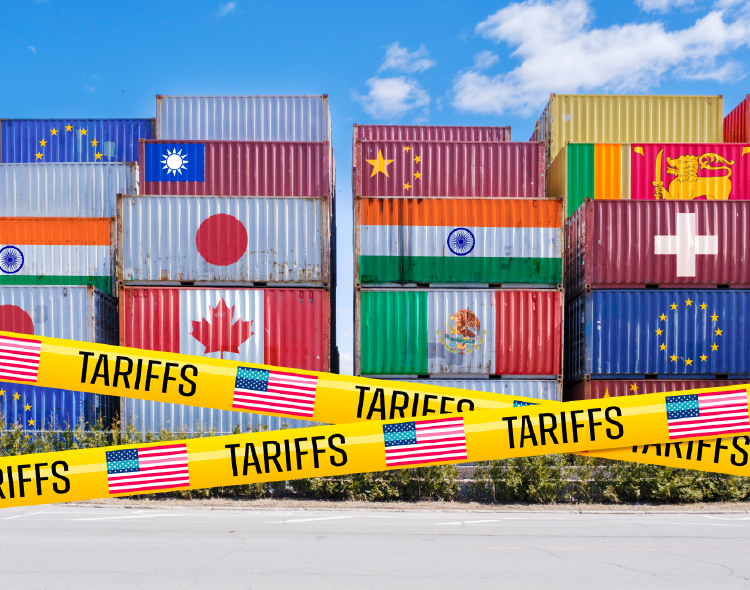


On February 20, 2026, the U.S. Supreme Court in Learning Resources v. Trump held, 6-3, that the International Emergency Economic Powers Act (IEEPA) does not authorize the President to unilaterally impose tariffs on products imported into the United States. The majority, per Chief Justice John Roberts, concluded that in this case the imposition of tariffs constitutes a tax; and that the power to tax—absent clear, explicit and specifically delimited delegation of such authority—is reserved to Congress under Article I of the U.S. Constitution.
Going forward, U.S. Customs & Border Protection (CBP) has issued guidance pursuant to Presidential order that, effective February 24, 2026, the IEEPA tariffs may no longer be collected. However, the President has ordered the imposition of a 10% duty on all nonexempt imports under the authority of Section 122 of the 1974 Trade Act, and announced expanded investigations under Section 301 of that Act and Section 232 of the 1962 Trade Expansion Act — a reminder that importers remain subject to an array of non-IEEPA Administration trade authorities, some of them product-specific (see below).
But the question of most immediate concern to businesses and their counsel was left unanswered: What about refunds for tariffs paid under the now-invalidated authority?
As Justice Brett Kavanagh noted in his dissent, “The Court says nothing about whether, and if so how, the Government should go about returning the billions of dollars it has collected from importers.”
The Court did not offer any direction on remedies for, or reimbursement of, previously collected duties. Most observers are assuming that guidance regarding a refund process will be forthcoming. During oral arguments last November, several justices — in discussing the likely complexity of the process — appeared to presume that if the tariffs were invalidated, such duties would be subject to reimbursement. Moreover, the Chief Justice’s comments in remanding the parallel VOS Selections case, which arrived via the D.C District and Circuit Courts, for lack of jurisdiction to the Court of International Trade (CIT) clearly indicate that when a process is devised, oversight of (as well as jurisdiction over matters arising under) it will lie with that Court.
Potential options for pursuing refunds include:
One important factor to bear in mind is that under U.S. regulations (19 C.F.R. Section 24.36) these remedies are available by law to Importers of Record. What recourse, if any, might be open to those further down the supply chain (manufacturers, retailers or consumers themselves) to whom the cost of duties may have been passed (whether totally or in part) remains to be seen. Much may depend upon the terms of individual contracts between such parties and their suppliers; some agreements might contain provisions requiring the importer to pursue – and share, if obtained – refunds if available. Absent such contractual terms, access to any recovery for those further down the chain who paid higher prices due to tariffs remains an open question; issues of proof and allocation may pose challenges (ditto for possible class actions).
For importers, the following steps are strongly recommended:
As noted above, the decision leaves untouched an array of other tariff authorities already available to the Administration. While some are constrained by procedural or substantive limitations, importers remain subject to these where applicable:
Importers and others concerned should seek to remain informed not only about the refund process (when there is one) but of the continually fluid tariff environment.
Phillips Lytle’s International Business Team is standing by to assist with any of these steps; and will continue to closely monitor all CBP and other government communications as the refund process guidance develops, and options and requirements become clearer.
Additional Assistance
For more information, please contact James Kevin Wholey at (202) 617-2714 or jwholey@phillipslytle.com; any member of the Phillips Lytle International Business Law Team; or the Phillips Lytle attorney with whom you have a relationship.
Receive firm communications, legal news and industry alerts delivered to your inbox.
Subscribe Now