
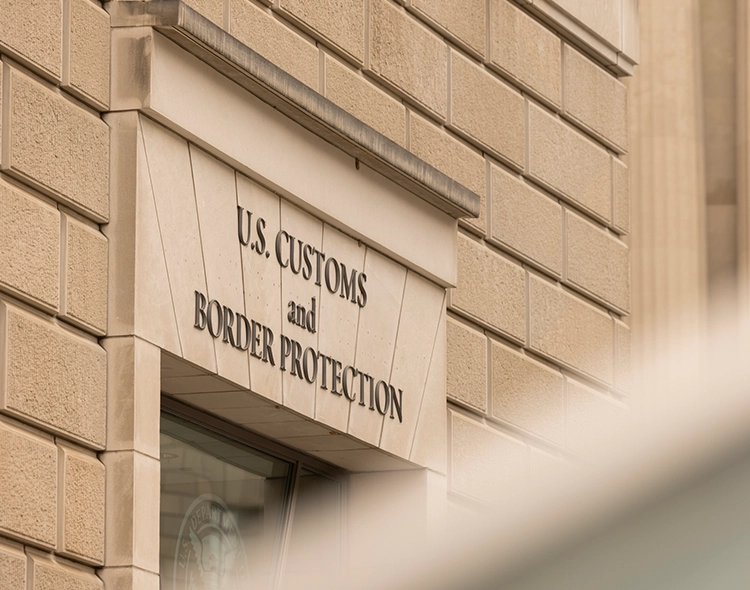

On October 6, 2026, Phase 3 of the Consolidated Administration and Processing of Entries (CAPE) system was opened and “successfully deployed” by U.S. Customs and Border Protection (CBP) according to a statement from CBP filed that day. The statement was filed by CBP with the Court of International Trade (CIT) in the lead IEEPA tariff refund case, Freestyle World, Inc. v. United States (CIT # 26-01088), providing for the processing of refunds for certain qualified importers with finally liquidated entries.
Phase 1 of CAPE (implemented on April 20, 2026) allowed refunds for qualifying entries that were yet unliquidated or within 80 days post-liquidation. Phase 2 (implemented on June 29, 2026) provided a refund process for such entries that were similarly unliquidated (or within the 80-day period) and flagged for reconciliation but for which no reconciliation entry had been filed.
Phase 3 is designed to process refunds for certain finally liquidated entries—those past the 80-day period—not eligible for processing under the first two Phases.
Phase 3 (as currently described) is available where:
As noted above, CBP has taken the position that, to receive a refund at this point, the importer must have received an order from CIT directing CBP to reliquidate its finally liquidated entries. CBP maintains that without such an order, it lacks the authority to issue refunds for finally liquidated entries. Consequently, at present, filing for and receiving a specific court order is the only sure path to qualifying for IEEPA refunds under Phase 3.
However, that legal conclusion is not necessarily final. In an appeal pending in the U.S Court of Appeals for the Federal Circuit (V.O.S. Selections v United States, Fed. Cir. # 26-01895), the government contends that CBP otherwise lacks its own authority to reliquidate entries past a certain point, and that the CIT lacks jurisdiction to authorize such relief to those without a claim before it. Plaintiffs, however, argue that the CIT has (unlike a district court) broad national jurisdiction regarding matters of trade and full authority to direct CBP to provide this administrative relief.
And on October 8 Judge Richard Eaton (the CIT judge tasked with overseeing the refund process) granted class action status to the array of plaintiffs in the other leading case (Freestyle World Inc. v. United States, CIT #26-01088), in an effort to provide refund access for certain smaller importers of liquidated entries for whom filing individual claims with court may have been too costly or otherwise impractical.
Resolution of these questions is unlikely to be immediate, as the government has stated its intent to appeal the class certification, while the Federal Circuit’s decision in V.O.S. Selections is sure to be appealed to the U.S. Supreme Court by the non-prevailing party.
With the availability of CIT or CAPE relief for importers that have not filed suit subject to this uncertainty, the prudent course appears to be filing a claim at the CIT as soon as practical for unrecovered duties on fully liquidated entries.
Importers should:
Additional Assistance
The Phillips Lytle International Business Team continues to closely monitor the rapidly moving developments on these and other trade regulation issues. For more information, please contact James Kevin Wholey at (202) 617-2714 or jwholey@phillipslytle.com, any member of the Phillips Lytle International Business Law Team or the Phillips Lytle attorney with whom you have a relationship.
Receive firm communications, legal news and industry alerts delivered to your inbox.
Subscribe Now