New Proclamation Changes Calculation of Duties on Imports Containing Foreign Steel, Aluminum and Copper
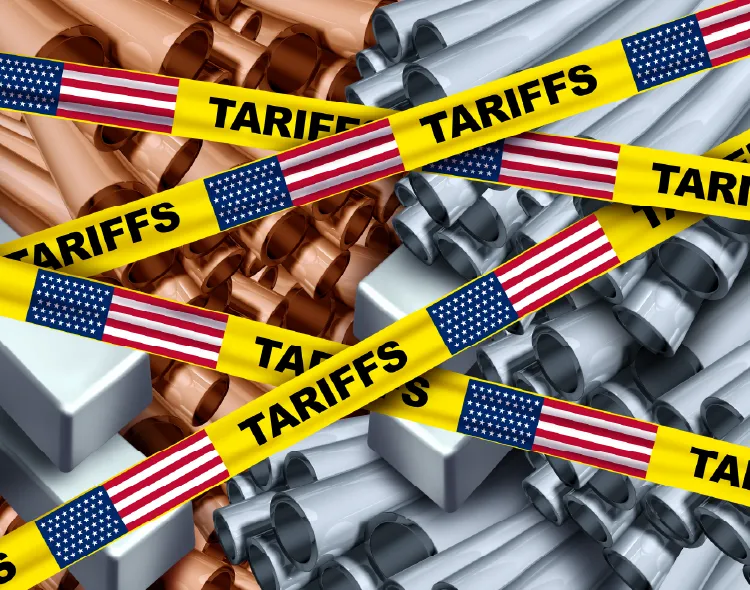
On April 2, 2026, President Trump issued a Proclamation with accompanying Annexes substantially revising the application of Section 232 tariffs on imports of foreign-origin steel, aluminum and copper and on finished products that combine them with non-metal materials (so-called “derivatives”).
The most significant overall change is moving away from a system that has been in effect since June of 2025, — which applies Section 232 tariffs on derivatives measured by the precise metal content of the imports. The new process calls for tariffs to be applied to the full customs value of the finished products themselves, within broad and simplified categories of metal content and certain specified Harmonized Tariff Schedule of the United States (HTSUS) classifications as set forth in the Annexes.
Under the Proclamation, as of April 6, 2026, imports subject to Section 232 are assessed in the following tiers:
- Imported products made completely (or almost completely) of non-U.S. origin steel, aluminum or copper: a 50% tariff rate will be applied to the full customs value of the entire product. This group generally includes commodity-grade steel pipe, tubing and mill products; aluminum wire, plate, bars and castings; and refined copper, wire, coils and alloys (Annex I).
- Derivative products in which the value of the foreign metal content is greater than 15% by weight: a flat rate of 25% will apply to the entire customs value of the finished product (not solely, as noted, on the metal content) (Annex I-B)1.
- For imported derivatives in which the non-U.S. metal content is 15% or less by weight of the customs value of the finished product: no Section 232 tariff will be applied—regular MFN and Column 1 duties only (Annexes III and IV).
- Foreign-manufactured imports in which the metal content is at least 95% U.S. origin (melted and poured, or smelted and cast, in the U.S.): a 10% flat rate will apply to the entire finished product (Annex I-B).
- Certain specified (by HTSUS classification) metal-intensive industrial base and electrical grid equipment deemed essential to the redevelopment of the defense industrial base: temporarily reduced, capped (inclusive of MFN duties) rate of 15% until the end of 2027. Beginning in 2028, the 25% rate will apply (Annex III).
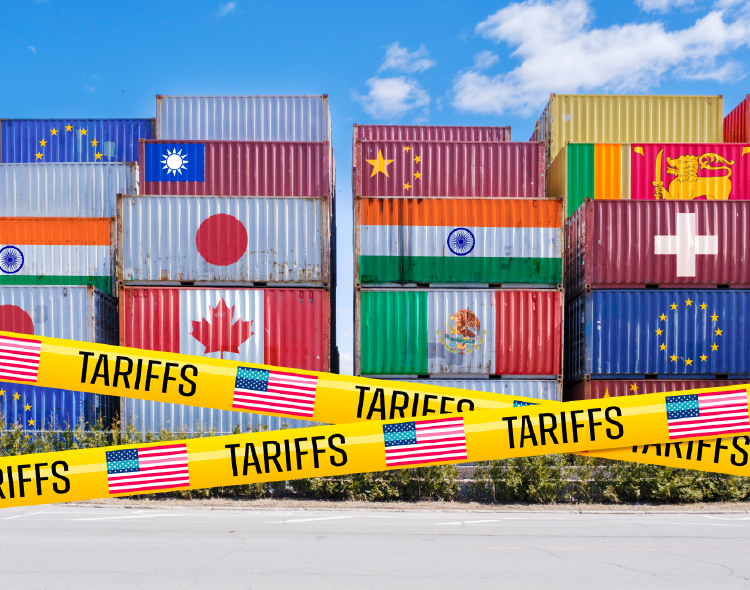
- Products from the United Kingdom, the European Union, Japan and South Korea will continue to receive the reduced rates consistent with their existing trade agreements with the U.S. (CBP Guidance 4/3/2026)
- Imports of aluminum articles and derivatives that are products of Russia, or for which any amount of primary aluminum used is smelted or cast in Russia: 200% existing tariff still applies (Annexes I-A, I-B and III).
In addition to specifying which products (by HTSUS classification) may be subject to which tier rate, the Annexes itemize an array of special exemptions and treatment adjustments, as well as products withdrawn from Section 232 coverage altogether. They bear careful scrutiny by importers and their counsel to identify their specific imports and determine the potential impact of these changes to their tariff exposure.
Two further notes:
- No “Stacking” — For products containing more than one of the metals subject to Section 232, the Proclamation directs that importers should pay only one of the tariffs; the steel, aluminum and copper duties will not aggregate or “stack” with each other.
- Drawbacks — In contrast with prior policy, under which no duty drawbacks were available under Section 232, manufacturing drawbacks are to be allowed for items listed in Annex I-B or Annex III (i.e., not subject to the 50% finished product rate) if 1) the product(s) are not subject to any antidumping or countervailing duty order, 2) the article is a product of any trading partner with which the U.S. has an Agreement on Reciprocal Trade, and 3) the metal was melted and poured (or smelted and cast) in such country.
Additional Assistance
Phillips Lytle LLP will continue to review the Proclamations and Annexes and closely monitor any forthcoming Executive Orders and emerging Customs and Border Protection guidance. For more information, please contact James Kevin Wholey at (202) 617-2714 or jwholey@phillipslytle.com; any member of the Phillips Lytle International Business Law Team; or the Phillips Lytle attorney with whom you have a relationship.
1 While the “full customs value” will be the basis for determining tariffs going forward, the Proclamation is effective only from April 6, 2026. It does not resolve challenges to recent CBP practice – unsupported by published notice or Guidance – of imposing 50% duties on the full metal value of derivatives including labor, machining, and manufacturing costs. These assessments have prompted a number of protests and lawsuits (most prominently Express Fasteners v. United States, Case No. 26-853, U.S. Court of International Trade, 1/27/2026), which remain pending as of this writing.